All Categories
Featured
Table of Contents
Technical Structures of 2026 Digital Infrastructure
The construction of innovation centers in 2026 requires a departure from conventional data center models. High-density compute requirements, driven by self-governing representative swarms and real-time spatial making, have pushed power density requirements past 50kW per rack. Physical architecture now focuses on thermal management systems that move beyond air cooling. Most brand-new centers in the local market now incorporate direct-to-chip liquid cooling or two-phase immersion systems. These technical options are no longer optional for facilities running the most recent neural processing systems that generate tremendous heat during reasoning cycles.
Structural engineering for these sites focuses on floor filling capacities that can manage the weight of dense battery storage and heavy cooling manifolds. As energy costs change, the ability to keep power in your area using solid-state batteries has actually ended up being a standard feature. These systems supply a buffer versus grid instability and permit the facility to take part in frequency reaction programs. This integration of energy storage and calculate capability specifies the modern technique to constructing high-performance centers.
Hardware lifecycles have actually reduced significantly by 2026. Architects style modular white-space environments where entire rows of equipment can be switched out without disrupting the surrounding operations. This modularity extends to the power circulation units, which now use software-defined power to allocate electricity based on real-time workload priority. Such versatility guarantees that the physical shell of the building stays pertinent even as the hardware inside develops every eighteen months.
Connection and Low-Latency Requirements in the regional market
Networking in 2026 centers on the combination of terrestrial fiber and satellite-to-edge handoffs. For an innovation hub to remain competitive, it needs to supply sub-millisecond latency to local industrial zones. This is achieved through localized carrier-neutral meet-me rooms that link directly to the regional 6G core. Dependence on Capability Centers helps with these connections, guaranteeing that information packages bypass the general public internet where possible. By reducing the physical range in between the data source and the processing node, these hubs support the millisecond-sensitive requirements of remote robotic surgical treatment and self-governing transport coordination.
Internal networking material has actually also moved towards optical changing. Conventional copper-based networking can not manage the bandwidth required for 2026-era AI model synchronization. Innovation hubs now deploy hollow-core fiber within the structure to decrease signal destruction and heat generation. These optical backplanes permit a flatter network architecture, which streamlines the management of huge information transfers between storage clusters and calculate nodes.
Security at the networking layer has actually transferred to a zero-trust model imposed at the hardware level. Every package is examined by dedicated security processors that operate at line speed. This avoids lateral movement of risks within the hub, an important requirement for facilities that host data from numerous completing companies. Encryption is now quantum-resistant by default, securing data versus future decryption capabilities that might arise within the next years.
Energy Method and Sustainability Protocols
The energy need of a 2026 development hub is significant. To handle this, centers in the local area are progressively turning to on-site microgrids. These microgrids combine hydrogen fuel cells with roof solar ranges, providing a multi-layered approach to energy resilience. Hydrogen functions as a long-duration storage medium, replacing the diesel generators that prevailed in previous years. This shift decreases the carbon footprint of the facility while improving its dependability throughout long-lasting grid failures.
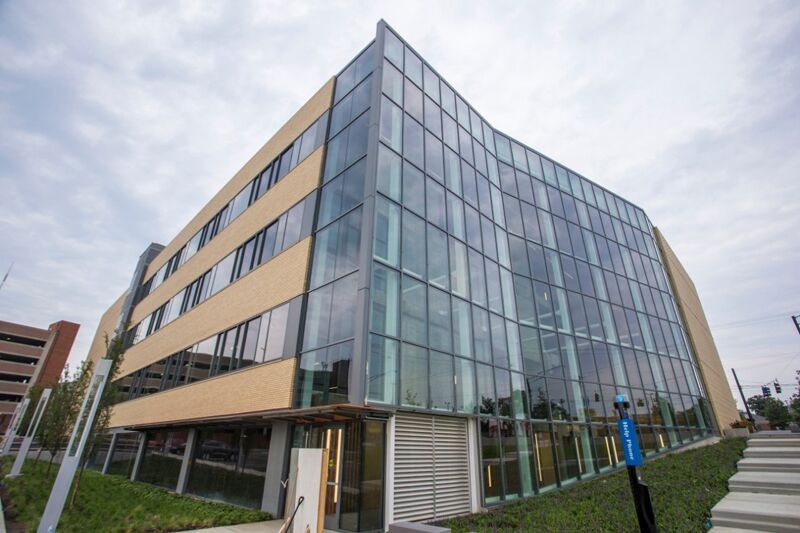
Heat recovery systems represent another significant architectural shift. Rather of venting waste heat into the atmosphere, 2026 hubs use heat exchangers to supply hot water or space heating to surrounding residential or commercial districts. This circular energy model makes the facility a more integrated part of the local utility network. In some cases, the revenue generated from selling waste heat can offset a substantial portion of the center's operational expenses.
Water use for cooling remains a point of analysis. Modern hubs use closed-loop systems that require very little water top-offs. By eliminating evaporative cooling towers, these centers minimize their effect on regional water products. Monitoring systems utilize AI to optimize the cooling loop in real-time, adjusting circulation rates based upon climate condition and internal heat loads. This precision guarantees that the facility operates at the most affordable possible power usage effectiveness ratio.
Data Sovereignty and Localized Processing
Regulations regarding information residency have ended up being stricter in 2026. Development hubs need to now offer clear physical and rational separation for information based upon its origin. This has resulted in the rise of sovereign cloud enclaves within larger facilities. These enclaves are governed by local legal standards, making sure that delicate intellectual home remains within the jurisdiction of the local region. This architecture permits business to utilize global tools while keeping rigorous control over their data properties.
Edge processing has actually changed how information is consumed. Instead of sending out all raw information to a central cloud, 2026 centers act as regional filtering points. They process the bulk of the data locally, sending just the essential metadata or results to larger information centers. This decreases the problem on long-distance transmission lines and reduces the cost of data storage. It also improves personal privacy, as delicate raw information never leaves the regional center.
Making use of Elite Global Capability Centers has actually become a technique for organizations to handle these localized data requirements. By executing particular protocols for data handling and storage, these organizations can abide by local laws without sacrificing the speed of their digital operations. This localized approach is particularly effective in sectors like health care and financing, where data privacy is a main concern.
Spatial Computing and the Hybrid Labor force
The physical style of innovation hubs in 2026 represent a labor force that is split in between physical existence and spatial telepresence. Satisfying spaces are equipped with high-fidelity volumetric capture varieties, permitting remote individuals to look like life-sized three-dimensional avatars. This requires substantial local calculate power and high-bandwidth cordless networking within the building. The walls are often treated with customized materials to prevent disturbance with the different tracking sensing units used for increased reality interfaces.

Workspace layout has moved far from repaired desks towards flexible partnership zones. These zones are created to be reconfigured within minutes, supported by under-floor power and information tracks. Acoustic engineering is more crucial than ever, as individuals frequently move between peaceful deep-work jobs and loud collaborative sessions involving both physical and virtual group members. Smart lighting systems change the color temperature level and intensity throughout the day to support the circadian rhythms of the residents.
Access control is dealt with through biometric systems that run without physical contact. Facial recognition and gait analysis permit authorized personnel to move through the building without stopping at standard checkpoints. This information is handled on a personal ledger within the hub, ensuring that individual biometric information is never ever exposed to external networks. These systems also track tenancy levels in real-time, permitting the structure's environment control system to adjust based on the number of people in a particular location.
Operational Durability and Future Planning
Constructing a development hub in 2026 is an exercise in preparing for the unidentified. Facilities must be designed with redundant courses for power, data, and cooling. This redundancy is not practically devices failure but also about being able to carry out upkeep without taking the whole system offline. Every component, from the transformers to the cooling pumps, is monitored by countless sensing units that forecast when a part is likely to fail before it in fact does.
Strategic planning includes keeping a portion of the floor space unallocated. This "gray area" permits the hub to respond rapidly to brand-new technological requirements, such as the abrupt requirement for quantum processing units or specialized bio-computing hardware. By having pre-cabled and pre-cooled space ready, the center can onboard new tenants or innovations in days instead of months. This speed is a primary differentiator for top-tier centers in the local market.
The management of these centers is significantly automated. AI-driven structure management systems deal with the daily operations, from optimizing energy use to scheduling janitorial services based on actual room usage. Human staff concentrate on high-level strategy and complex troubleshooting, while the software application makes sure that the environment remains within the rigorous parameters required for high-performance computing. This shift towards self-governing operations decreases human mistake and reduces the general expense of keeping the center.
Long-lasting practicality depends upon the capability to incorporate with the developing local facilities. As the regional area updates its transportation and energy networks, the center must have the ability to adapt. This might involve including electrical automobile charging stations for self-governing shipment fleets or linking to new high-speed rail links. By remaining versatile and deeply integrated with its environments, the innovation hub functions as a steady structure for the digital demands of 2026 and beyond.

Table of Contents
Latest Posts
Why Smart Lighting Is Just the Start of Green Infrastructure
Reassessing Resource Allotment in the Age of Intelligent Automation
Protecting the Edge: Safeguarding Distributed Research Study Data Points
Latest Posts
Why Smart Lighting Is Just the Start of Green Infrastructure
Reassessing Resource Allotment in the Age of Intelligent Automation
Protecting the Edge: Safeguarding Distributed Research Study Data Points